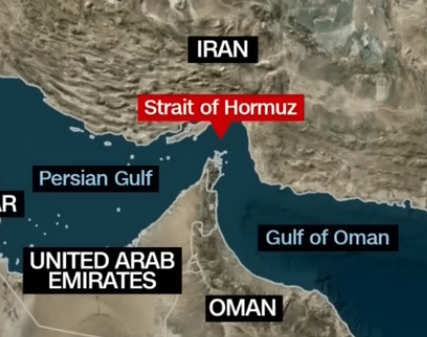
Every few decades, an alliance faces a test that reveals its true character. The Strait of Hormuz is that test for NATO — and so far, too many allies are failing it.
Here is the backdrop: On February 28, the United States and Israel launched Operation Epic Fury against Iran, targeting military facilities, nuclear sites, and the regime’s top leadership. In response, Iran’s Revolutionary Guard Corps shut the strait to all Western shipping — triggering what the International Energy Agency has called the largest oil supply disruption in the history of the global energy market. Brent crude surged past $100 a barrel for the first time in four years, peaking near $126. Roughly 20% of the world’s daily seaborne oil supply — some 20 million barrels — flows through that 21-mile-wide chokepoint. It is not an abstraction. It is every NATO ally’s economy at risk.
America’s response has been characteristically decisive. CENTCOM deployed A-10 Thunderbolts to strike Iranian fast-attack boats, Apache gunships to neutralize drone swarms, and GBU-72 penetrator munitions to destroy underground missile silos along the Iranian coast. Israel eliminated Alireza Tangsiri, the IRGC naval commander overseeing the blockade. The USS Tripoli, carrying 3,500 Marines, is now in the region. The price of freedom of navigation is being paid — in American lives and American resources — as usual.
The response from many NATO allies? Reluctance, hedging, and excuses.
France and Germany initially ruled out sending warships. Spain’s prime minister went further, threatening to block U.S. use of Spanish bases for Iran missions. Trump — correctly — called it out on Truth Social: “The United States has been informed by most of our NATO allies that they don’t want to get involved. We will protect them, but they will do nothing for us.” He later added the pointed summary: “Without the U.S.A., NATO is a paper tiger.”
There are bright spots worth acknowledging. Britain’s Foreign Secretary Yvette Cooper announced today that the UK has now convened 35 nations behind a statement of intent, with a formal planning meeting underway. Japan’s Prime Minister pledged portions of the Japanese Navy. The United Arab Emirates is actively lobbying for a UN Security Council resolution to authorize coalition action and has declared willingness to join a U.S.-led military effort. Poland, the Eastern European nations, Australia, Canada, and others have signed on. These are the allies doing the right thing.
But the coalition’s statement — while covering 35 nations on paper — still has no operational mechanism in place. Words signed in Brussels or London do not sweep mines from the Persian Gulf. NATO Secretary General Mark Rutte acknowledged that allies are “intensely discussing” the situation while admitting no deployment timeline exists. There are an estimated 2,000 vessels and 20,000 seafarers stranded in the region. Every day of discussion is another day of economic damage to the very countries declining to act.
The math is stark: the U.S. still accounts for roughly two-thirds of total NATO military spending. European NATO members underspent their own defense pledges by an estimated $828 billion since 2014. And now, when an actual crisis demands real naval assets, the answer from Paris and Berlin is a joint press release.
Trump has set an April 6 deadline for results. Secretary Rubio has signaled the U.S. is prepared to step back and let others lead the policing mission once Iranian military capability is degraded. That is a reasonable offer. The question is whether NATO’s European heavyweights will finally show up — with ships, not statements.
The Strait of Hormuz is not just a test of burden sharing. It is a test of whether the alliance means anything when the bill comes due.